Cooking for One Without Waste: A Practical Guide
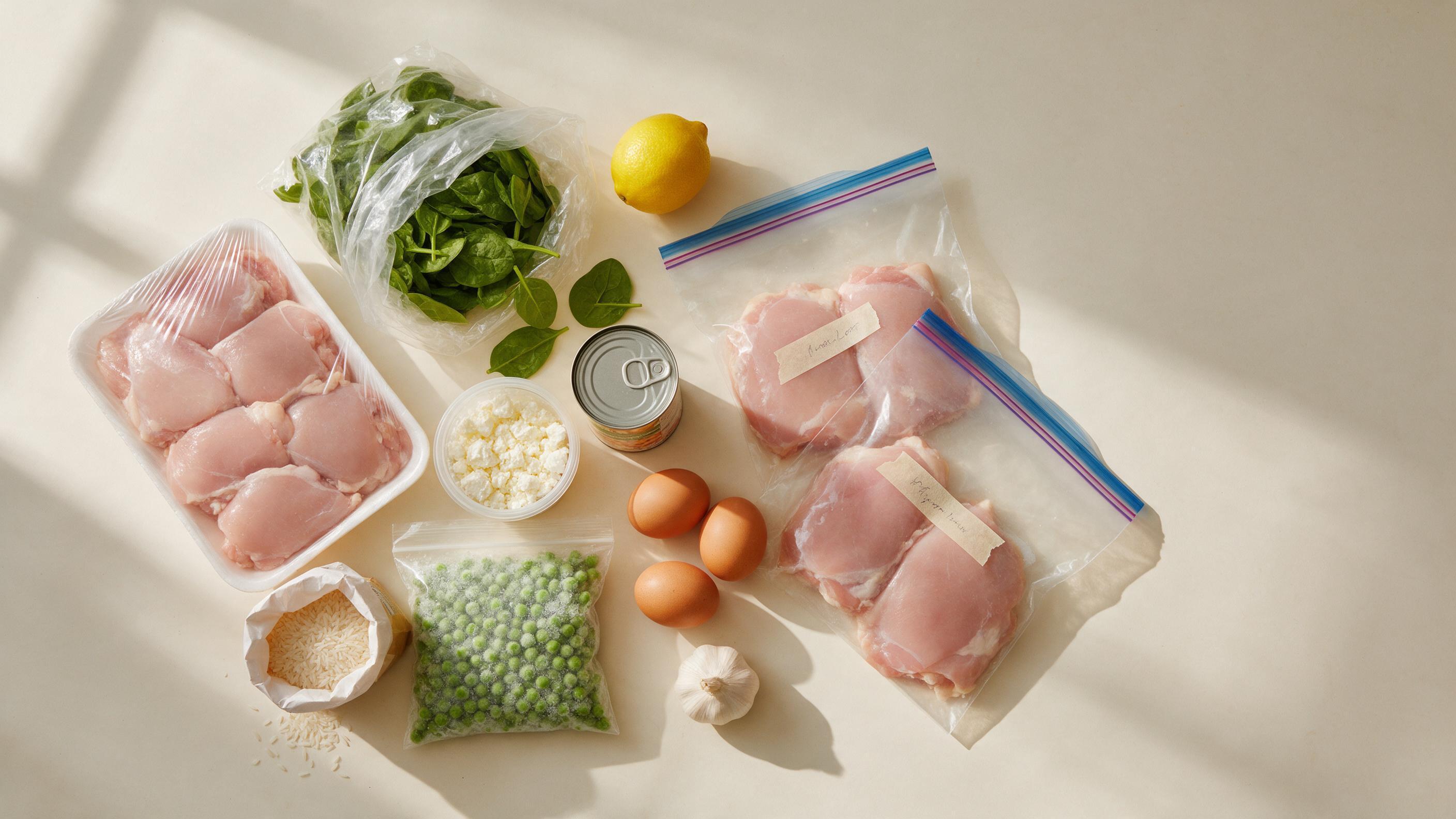
You open the fridge on Thursday and there it is again: the rest of Sunday's spinach gone dark and slick, half a can of beans you meant to use, and a chicken breast you forgot you bought. It happens to almost everyone who cooks for one, and it isn't a willpower problem. Recipes are written for four, and grocery packs are sized for families. The fix comes down to three habits: shop for a few dinners that share ingredients, cook the slow parts once and eat them twice, and freeze what you won't use the day you buy it, not the day it starts to turn. Here's how each habit works, followed by one Sunday shopping trip that turns into three different dinners, with nothing left to throw away.
Shop for three dinners, not one recipe
Most food waste is decided in the store, long before that Thursday fridge check. Before you shop, sketch out three dinners that share four or five fresh ingredients. A bag of spinach bought for one salad will wilt in the drawer; the same bag spread across three dinners gets finished. It also helps to know roughly how much one person eats. A good starting point for a single dinner is 4 to 6 ounces of raw meat or fish, about a third of a cup of dry rice (it roughly triples as it cooks), 2 to 3 ounces of dry pasta, or half to three-quarters of a cup of drained beans. A standard 15-ounce can holds about 1½ cups once drained, so one can covers two meals. Leafy greens look like a lot and shrink fast: two cups of raw spinach cook down to roughly half a cup, according to South Dakota State University Extension. Treat these numbers as a first guess and adjust after a week or two. Then deal with pack sizes the moment you get home. If meat comes in a family pack, split it into single portions, wrap each one tightly, write the date on it and freeze it. If it will stay in its store packaging for more than two months, the FDA suggests overwrapping it with foil or a freezer bag. The freezer aisle helps too: frozen peas, spinach and berries let you take a handful and put the rest back, as Montana State University Extension points out. For small amounts of anything else, bulk bins, the salad bar and the deli counter will sell you two ounces instead of a pound. Finally, keep a short pantry that turns small amounts of fresh food into a meal: rice, pasta, canned beans, eggs, garlic, olive oil and a sauce or two, such as soy sauce or salsa.
Shrinking a recipe without ruining it
Recipes written for four are still worth cooking; they just need shrinking sensibly. Halve them rather than quartering them. The math is easier, and you get dinner plus one planned leftover. A few things don't scale in a straight line. For eggs, beat one and use half; a large egg is about 3 tablespoons once beaten. Use a smaller pan, because a little food spread thin in a big skillet reduces too fast and scorches; for bakes, an 8-inch square dish is a little more than half the size of a 9-by-13. Searing times stay about the same, since one chicken thigh cooks like four, but a smaller casserole finishes sooner, so check early and go by temperature rather than the clock. Halve the salt and spices too, then taste and add more if it needs it. Some dishes are worth making in full anyway. Chili, soups, stews, tomato sauces and lasagna all freeze well in single portions, according to Colorado State University Extension, so cook the whole batch and freeze the rest in containers you can reheat one at a time.
One basket, three dinners
Here's what those habits look like over a few days, starting with one Sunday shopping trip. The basket is small: a pack of boneless, skinless chicken thighs (about 1¼ pounds), a 5-ounce bag of baby spinach, a 15-ounce can of chickpeas, a 4-ounce tub of crumbled feta, one lemon and a bag of frozen peas. From the pantry you'll need a cup of long-grain white rice, eggs, garlic, olive oil, red pepper flakes and soy sauce. Back home on Sunday, set aside two thighs for tonight and freeze the rest in two labeled portions. Raw chicken keeps only 1 to 2 days in the fridge, but about 9 months in the freezer, according to the FDA. Then cook the whole cup of rice. It makes about 3 cups, enough for all three dinners.
Sunday: Lemon-garlic chicken with rice and spinach
This first dinner quietly sets up the other two. Pat the two thighs dry and season them with salt, pepper and the zest of the lemon, then cut the lemon in half. Brown the thighs in a tablespoon of olive oil over medium-high heat, about 5 to 6 minutes per side, until a thermometer in the thickest part reads 165°F. Lift them out, lower the heat, and cook a sliced garlic clove for 30 seconds before stirring in 2 cups of spinach until it just wilts. Squeeze half the lemon over the pan. Eat one thigh with ¾ cup of rice, the spinach and an ounce of feta crumbled over the top. Within two hours, refrigerate the second thigh and the rest of the rice in shallow containers, and wrap the other lemon half cut side down.
Monday: Crispy chickpeas with spinach, feta and a fried egg
Monday is the meatless night, and it's on the table in about 15 minutes. Drain and rinse the chickpeas, pat about half of them dry, and move the rest into a container; they'll keep 3 to 4 days in the fridge, or much longer frozen flat in a bag. Fry the dried chickpeas in a tablespoon of olive oil over medium-high heat for 6 to 8 minutes, shaking the pan, until they're golden in spots. Add a sliced garlic clove and a pinch of red pepper flakes for 30 seconds, then 2 more cups of spinach, the juice of the other lemon half and 2 ounces of feta. Clear a space in the pan, crack in an egg, cover, and cook for 3 to 4 minutes until the white sets. Serve it all over ¾ cup of leftover rice, reheated until steaming hot.
Tuesday: Chicken fried rice
This is the flexible dinner, built from what's left, and day-old rice is exactly right for it: it's drier than fresh rice, so the grains fry separately instead of clumping. Heat a tablespoon of oil in a large skillet, add the last 1½ cups of cold rice, break it up, and cook for 3 to 4 minutes until it starts to crisp. Stir in the diced leftover chicken and half a cup of frozen peas for 2 to 3 minutes, until everything is hot all the way through (165°F). Push the rice to one side, scramble an egg or two in the gap, then fold in the last cup of spinach and a teaspoon or two of soy sauce.
Thursday, again
Open the fridge on Thursday this time and the picture is different. The rice, spinach and lemon are gone, and the cooked chicken and rice were eaten well inside their 3-to-4-day window. What's left is useful rather than wasteful: two portions of chicken in the freezer for next week, half a can of chickpeas for a salad or soup, a little feta for your eggs, and most of the frozen peas. The ingredients are only one example; the pattern is what carries over. Cook one protein once and eat it twice, make one batch of grain, spread one bag of greens across the week, and split one can in half. Tofu, kale and white beans work exactly the same way.
Keeping leftovers safe, and worth eating
None of this works unless leftovers stay safe, and cooking for one means more of them. A few basics from the USDA Food Safety and Inspection Service matter more than usual. Refrigerate cooked food within two hours, or within one hour if the room is above 90°F. Cool it quickly by spreading it out in shallow containers; hot food can go straight into the fridge. Most cooked leftovers, rice and pasta included, keep 3 to 4 days in a fridge set to 40°F or below, or 3 to 4 months in the freezer. Raw chicken is the exception: cook or freeze it within 1 to 2 days. Freezing keeps food safe indefinitely, so freezer times are about quality; past them, food is still safe but drier and less flavorful. Thaw frozen portions in the fridge when you can, and reheat leftovers to 165°F, covered, stirring partway through if you're using the microwave. Leftover beans can technically stay in the can, but FSIS notes that a glass or plastic container keeps them tasting better. Safe leftovers still have to be appealing enough to eat, so decide each one's second job before it goes into the fridge. Cooked chicken becomes fried rice, tacos or a quick soup. Rice becomes fried rice or a burrito bowl, or goes into the freezer in single portions if you won't get to it within three days. Half a can of beans can be mashed on toast or tossed into a salad. Spinach that's going soft is still good cooked into eggs or pasta, though slimy leaves should go. Two habits keep all of this on track: a "use first" spot at eye level in the fridge for opened and cooked food, and a running list of what's in the freezer, so frozen portions get eaten instead of forgotten.
Start with one basket
Cooking for one gets easier with a small shift in how you shop, not with special recipes. Buy for three dinners instead of one recipe. Cook rice or chicken once and use it twice. Decide what each leftover will become before it goes into the fridge. Freeze extra meat the day you bring it home. Use the most perishable ingredients in the first two dinners, and let the third be the flexible one, built from whatever is left. Try it with a single shopping trip next week. If a few things are still in the fridge by the weekend, buy a little less of them next time. That's how the quantities start to fit the way you actually eat.
In this story
- cooking for one
- food waste
- meal planning
- leftovers
- food storage
- grocery shopping
- small-batch cooking
A little more confidence in your kitchen.
Practical ideas from Zestro, the AI voice chef that helps you find your meal and cook it, one step at a time.
Meet your kitchen companion